
Depression does not arrive with warning sirens. More often, it settles in like a thick fog. At first, you might attribute your fatigue to a busy week or blame your irritability on poor sleep. But as days turn into weeks, getting out of bed feels like lifting lead weights. Activities that once sparked joy feel hollow. You find yourself retreating from friends and family, trapped in a relentless internal monologue of hopelessness and self-doubt.
When you reach the point of recognizing you cannot fix this on your own, searching for a therapist near me for depression is one of the most critical and courageous steps you will ever take.
However, opening a search engine and typing that query can quickly feel overwhelming. You are met with hundreds of directory listings, confusing clinical acronyms, varied credentials, and uncertain insurance details. How do you find a therapist who truly understands your situation, offers proven clinical treatments, and provides an environment where you feel safe and respected?
In this comprehensive guide, we will break down everything you need to know about finding the right depression therapist—including evidence-based therapy modalities, questions to ask prospective providers, the choice between in-person and telehealth care, and how Kairos Embrace provides compassionate, whole-person depression treatment across Maryland and Delaware.
Understanding Clinical Depression: You Are Not Alone
It is essential to understand that major depressive disorder is not a personal failure, a lack of willpower, or a character flaw. It is a complex medical and psychiatric condition involving neurobiological changes, neurotransmitter imbalances, genetic predispositions, and environmental stressors.
According to data from the National Institute of Mental Health (NIMH), an estimated 21 million American adults experience at least one major depressive episode each year. In Maryland and Delaware alone, tens of thousands of individuals and families navigate depression daily.
Common symptoms that indicate it is time to seek professional depression therapy include:
- Persistent sad, anxious, or “empty” mood lasting more than two weeks.
- Loss of interest or pleasure in hobbies, relationships, and daily activities (anhedonia).
- Chronic fatigue, decreased energy, and feeling physically weighed down.
- Sleep disturbances—either insomnia, early-morning awakening, or excessive sleeping.
- Significant changes in appetite, weight loss, or emotional overeating.
- Feelings of worthlessness, excessive guilt, or helplessness.
- Difficulty concentrating, remembering details, or making simple decisions.
- Noticeable changes in daily functioning, reflecting the severe effects of mental health on daily life.
- Recurring thoughts of death, self-harm, or wishing you would not wake up.
If these symptoms sound painfully familiar, know this: depression is one of the most treatable of all psychiatric conditions. Between 80% and 90% of people with depression eventually respond well to treatment.
Evidence-Based Therapies for Depression: What Works?
When searching for a depression therapist, it is helpful to know what types of therapy have the strongest clinical evidence behind them. Licensed mental health clinicians typically use one or a combination of the following modalities:
1. Cognitive Behavioral Therapy (CBT)
Cognitive Behavioral Therapy is widely regarded as the gold standard in depression treatment. CBT operates on the premise that our thoughts, emotions, and behaviors are inextricably linked.
Depression frequently traps individuals in automatic negative thought patterns (e.g., “Nothing ever works out for me,” “I am a burden to my family”). In CBT, your therapist helps you identify these distorted cognitive scripts, challenge their validity, and replace them with balanced, grounded perspectives. You also engage in behavioral activation—gradually reintroducing rewarding, purposeful activities into your schedule to break the cycle of depressive withdrawal.
2. Interpersonal Psychotherapy (IPT)
Depression frequently develops in the wake of interpersonal disruption—such as the loss of a loved one, a painful divorce, a major life transition, or unresolved relational conflict. IPT focuses specifically on improving your communication patterns, resolving social disputes, and building a supportive relational network to buffer against depressive symptoms.
3. Acceptance and Commitment Therapy (ACT)
ACT incorporates mindfulness strategies with personal values. Rather than fighting or struggling against painful thoughts and feelings, ACT teaches you to accept them without judgment while committing to actions that align with your deeply held values.
4. Faith-Integrated Therapy
For many individuals and families, faith and spiritual beliefs are central to identity and healing. A secular therapist may not understand how prayer, Scripture, or spiritual crises intersect with emotional distress. Faith-integrated depression therapy weaves evidence-based clinical techniques (like CBT) with Christian spiritual principles, offering whole-person healing for mind, body, and spirit. Learn more about how faith-based counseling supports emotional recovery.
Therapy vs. Medication: Why Integrated Care Delivers the Best Results
As you search for a depression therapist, you will likely encounter an important question: Do I need therapy, medication, or both?
While mild depression can often be successfully managed with therapy alone, moderate to severe depression typically responds best to an integrated approach combining psychotherapy and psychiatric medication management.
Medications such as SSRIs (Selective Serotonin Reuptake Inhibitors) or SNRIs help restore neurochemical balance in the brain, lifting the crippling fatigue, brain fog, and intense despair enough so that you have the mental energy to actively engage in therapy. Therapy, in turn, equips you with permanent psychological skills to prevent future relapse.
At Kairos Embrace, our practice is unique in offering both comprehensive therapy and licensed psychiatric medication management under one roof, ensuring your providers collaborate seamlessly.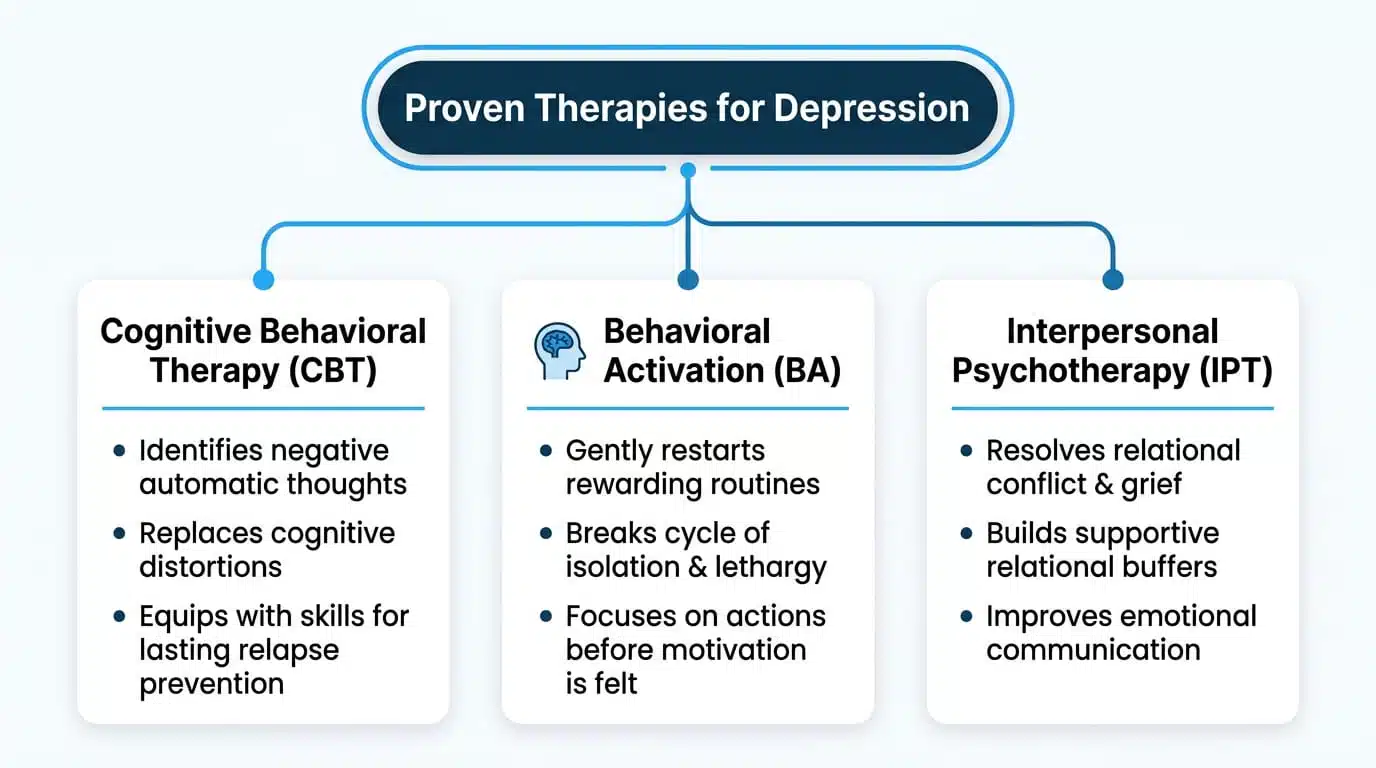 What to Look for When Choosing a Depression Therapist
To ensure you find the right fit for your unique needs, consider these crucial factors:
1. Licensure and Credentials
Ensure the provider is fully licensed to practice in your state. Relevant credentials include:
- PMHNP-BC: Psychiatric-Mental Health Nurse Practitioner (board certified to conduct psychiatric evaluations, prescribe medication, and provide counseling).
- LCSW-C / LCSW: Licensed Certified Social Worker-Clinical.
- LCPC / LPC: Licensed Clinical Professional Counselor.
- PsyD / PhD: Clinical Psychologist.
2. Experience with Depressive Disorders
Ask prospective therapists how much of their caseload involves depression. You want a provider who specializes in mood disorders and regularly treats depression using evidence-based modalities.
3. Worldview and Cultural Competency
Healing requires total honesty and vulnerability. If your Christian faith is a cornerstone of your life, you need a provider who respects and nurtures that faith. Kairos Embrace specializes in Christian mental health therapy in Maryland and Delaware, ensuring your spiritual worldview is valued.
4. Availability of Telehealth vs. In-Person Visits
Consider what format best fits your life:
- In-Person Care: Ideal if you value having a dedicated, neutral physical space away from home or work distractions.
- Telehealth (Online Therapy): Highly convenient for busy parents, working professionals, or individuals whose depression makes leaving the house feel insurmountable.
5 Questions to Ask During Your Initial Consultation
Most quality practices offer a brief initial consultation so you can assess mutual fit. Here are five powerful questions to ask:
- “What therapeutic approaches do you find most effective for someone experiencing symptoms like mine?”
- “Do you provide or coordinate with psychiatric providers if medication might be beneficial?”
- “How do you incorporate personal values or Christian faith into the therapy process?”
- “What does a typical session look like, and how do we measure progress over time?”
- “Do you have immediate availability for either in-person sessions or telehealth appointments?”
Pay close attention to how you feel during the conversation. Do you feel listened to? Are their explanations clear and compassionate? A strong therapeutic alliance is one of the greatest predictors of clinical success.
Local Depression Care Across Maryland and Delaware
If you live in Maryland or Delaware, Kairos Embrace Behavioral Health provides accessible, personalized depression care tailored to your community:
Maryland Locations & Telehealth
- Laurel, MD Clinic: Located conveniently at 14300 Cherry Lane Court, Suite 108, Laurel, MD 20707 (Phone: 240-570-7349). Serving Prince George’s County, Montgomery County, Howard County, and Anne Arundel County.
- Statewide Maryland Telehealth: Secure, HIPAA-compliant virtual psychiatric and therapy appointments available for residents in Baltimore, Silver Spring, Bethesda, Rockville, Annapolis, Frederick, and across the state.
Delaware Locations & Telehealth
- Dover, DE Clinic: Serving Kent County and central Delaware (487 South Queens Street, Dover, DE 19904).
- Smyrna, DE Clinic: Located at 1000 Smyrna Clayton Boulevard, Unit #5, Smyrna, DE 19977.
- Statewide Delaware Telehealth: Accessible from Wilmington, Newark, Middletown, Lewes, Rehoboth Beach, and beyond.
To explore all psychiatric and psychological conditions we support, visit our overview of what we treat.
Why Choose Kairos Embrace Behavioral Health?
At Kairos Embrace Behavioral Health, our guiding mission is “Inspiring Hope, Restoring Lives.” We recognize that depression can make the future look bleak, but you do not have to walk this road alone.
Here is what sets our practice apart:
- Integrated Care Under One Roof: You can receive psychiatric evaluations, medication management, and individual therapy from a cohesive, collaborative team.
- Whole-Person Philosophy: We care for your mind, body, and spirit—addressing biological imbalances, emotional wounds, and spiritual vitality together.
- Faith-Grounded Environment: Optional Christian-integrated counseling that provides a safe, judgment-free space to bring your faith into the therapy room.
- Immediate Accessibility: We offer prompt appointment scheduling without months of waiting, combined with a free 15-minute consultation to help you get started comfortably.
If you are also exploring broader mental health conditions, such as anxiety or ADHD, review our guide to the types of mental illness and our comprehensive approach to how to improve mental health.
Book Your Free 15-Minute Consultation Today
You have carried this heavy burden by yourself for long enough. Reaching out for professional help is not giving up—it is choosing to fight for your future.
Schedule a free 15-minute consultation with our clinical team today to discover how our depression therapists can help restore hope and joy to your life: