
When people decide they want to improve their emotional wellbeing, their instinct is often to make dramatic, sweeping lifestyle changes. They vow to meditate for an hour every day, eliminate all sugar from their diet, read a self-help book each week, and completely overhaul their schedule.
Yet within two weeks, the enthusiasm fades, overwhelm sets in, and they find themselves back where they started—often accompanied by a painful sense of failure.
The secret to lasting psychological transformation is not dramatic upheaval; it is the power of consistent, incremental routines. Your brain is a neuroplastic organ that continually molds itself around what you repeatedly do. By intentionally adopting evidence-based habits to improve mental health, you create a steady foundation of neurobiological stability, emotional resilience, and peace.
In this guide, we explore nine scientifically validated daily habits that can significantly boost your mood, reduce symptoms of anxiety and depression, and restore wholeness to your mind, body, and spirit.
The Science of Habit Formation and Neuroplasticity
Why are daily habits so much more effective than occasional grand gestures?
In behavioral psychology and neuroscience, habits are defined as automated neurological loops consisting of a cue, a routine, and a reward. When you perform a routine consistently in response to an environmental cue, the prefrontal cortex delegates the task to the basal ganglia—the brain’s efficiency engine.
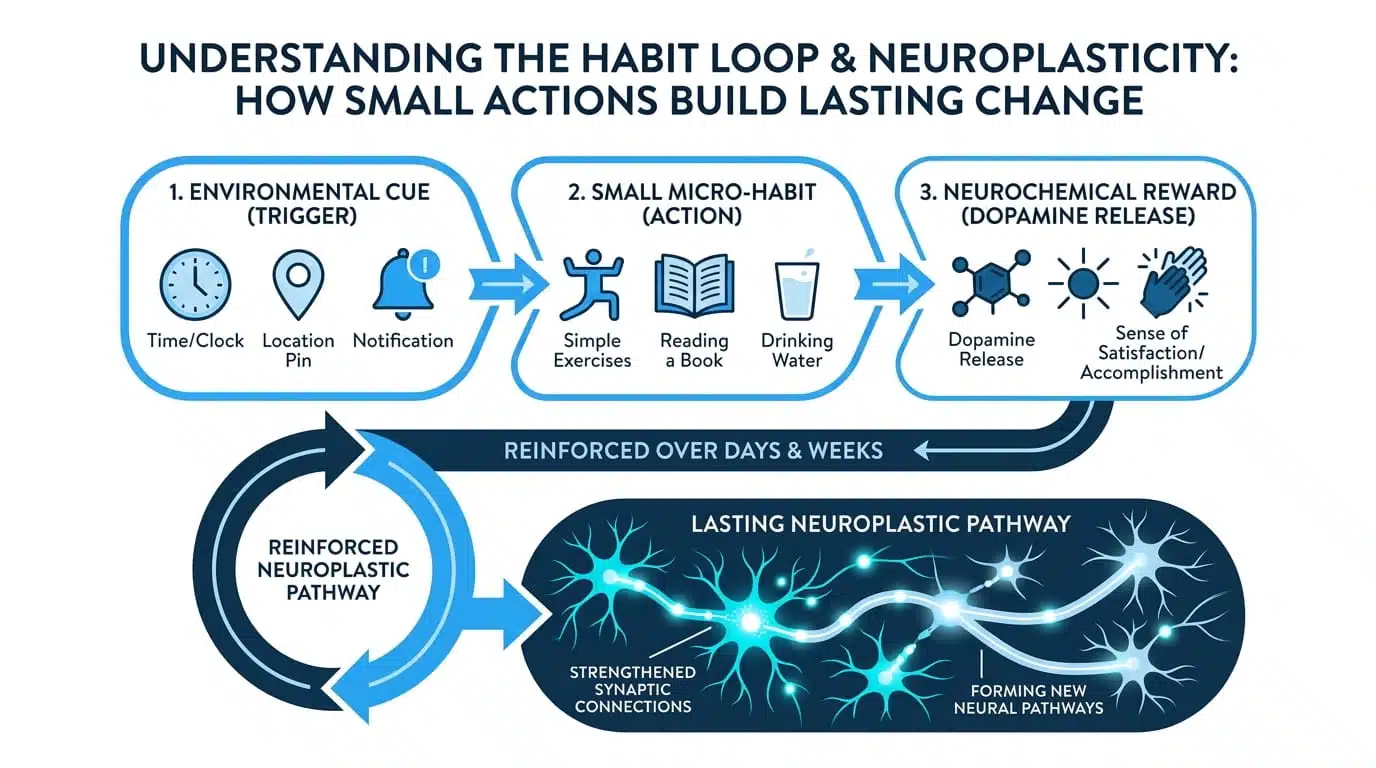
Furthermore, through neuroplasticity, repeated positive behaviors stimulate the release of Brain-Derived Neurotrophic Factor (BDNF). This protein promotes the survival of neurons, encourages the formation of new synaptic connections, and physically rewires neural circuits previously dominated by rumination, fear, or depressive lethargy.
Small habits, practiced faithfully, produce compound emotional interest over time.
9 Evidence-Based Habits to Improve Mental Health
The following nine habits address the biological, psychological, social, and spiritual dimensions of human health. You do not need to implement all nine at once; choose one or two to practice this week, building gradually as they become second nature.
1. View Morning Sunlight Within 60 Minutes of Waking
Your circadian rhythm governs far more than just when you feel sleepy. It regulates mood-stabilizing neurotransmitters (including serotonin and dopamine), core body temperature, and the daily cortisol spike needed for alertness.
Stepping outside for 10–15 minutes of natural sunlight soon after waking triggers retinal ganglion cells that synchronize your brain’s master biological clock (the suprachiasmatic nucleus). Research from the National Institutes of Health (NIH) demonstrates that early morning light exposure significantly alleviates symptoms of seasonal affective disorder (SAD) and major depression while dramatically improving nighttime sleep quality.
2. Engage in 20–30 Minutes of Rhythmic Movement
Physical exercise is one of the most thoroughly studied non-pharmacological interventions in psychiatry. Regular physical activity increases endorphins, boosts serotonin synthesis, lowers systemic inflammation, and stimulates neurogenesis in the hippocampus—the brain region responsible for memory and emotional regulation.
You do not need exhausting high-intensity workouts to reap these rewards. Rhythmic, moderate exercise such as brisk walking, cycling, swimming, or stretching is remarkably effective. A meta-analysis published in the American Journal of Psychiatry concluded that just one hour of physical activity per week can prevent up to 12% of future depression cases.
3. Practice “Nervous System Down-Regulation”
Throughout the day, high-stress demands trigger your sympathetic nervous system—the “fight-or-flight” response. If you never intentionally down-regulate, your body remains stuck in a state of hyper-arousal, leading to chronic anxiety and exhaustion.
Make a daily habit of activating your parasympathetic (“rest-and-digest”) system using intentional breathwork:
- The Physiological Sigh: Inhale deeply through your nose, take a second quick “top-off” inhale, and exhale slowly through your mouth for twice as long. Repeating this just three times rapidly slows your heart rate.
- Box Breathing: Inhale for 4 seconds, hold for 4, exhale for 4, and hold for 4.
Practicing down-regulation two or three times a day retrains your nervous system to return to a baseline of safety.
4. Feed Your Microbiome (The Gut-Brain Axis)
Approximately 90% of the body’s serotonin—a neurotransmitter critical for mood regulation, appetite, and sleep—is produced in the gastrointestinal tract. The trillions of microbes residing in your gut communicate directly with your brain via the vagus nerve and metabolic byproducts.
Dietary habits to improve mental health include:
- Eating prebiotic fiber (garlic, onions, oats, apples) to feed beneficial gut bacteria.
- Incorporating fermented foods (plain Greek yogurt, kefir, sauerkraut) containing active probiotics.
- Minimizing ultra-processed foods and artificial sweeteners that induce systemic neuroinflammation.

5. Practice Intentional Digital Hygiene
Smartphones provide unprecedented connectivity, but they also expose our brains to an unnatural firehose of distressing news, comparison-inducing social media feeds, and relentless interruptions.
Build protective boundaries around your attention:
- No screens in the first 30 minutes of the morning: Allow your brain to wake up grounded in reality rather than digital panic.
- Turn off non-essential notifications: Keep calls and messages from real people, but silence news alerts, social media pings, and app promotions.
- Implement a Digital Sunset: Put phones in another room at least 60 minutes before bedtime to prevent blue light from suppressing natural melatonin production.
6. Engage in Daily Relational Connection
Humans are profoundly social creatures wired for attachment and community. Chronic loneliness activates the exact same neurobiological threat pathways in the brain as physical danger.
Make it a non-negotiable habit to foster authentic connection each day:
- Call a close friend or family member for a five-minute voice check-in instead of sending a detached text.
- Have a distraction-free conversation with your spouse or child.
- Share an encouraging word with a coworker or neighbor.
When you feel seen, understood, and valued by another person, your brain releases oxytocin, which naturally buffers against cortisol and anxiety.
7. Express Daily Gratitude and Reflective Writing
Our brains have an inherent evolutionary “negativity bias”—we are wired to detect threats and remember unpleasant events far more vividly than positive ones.
Daily expressive journaling and gratitude writing deliberately counteract this bias:
- Write down three specific things you are grateful for each evening. Rather than generic items (“my house”), note vivid moments (“the sound of rain against the window while drinking my coffee”).
- Practice expressive writing to process difficult emotions, bringing the principles of emotional self-care into your evening routine.
Studies indicate that regular gratitude journaling correlates with decreased depressive symptoms, lower blood pressure, and improved emotional resilience.
8. Cultivate Spiritual Grounding and Prayer
For millions of individuals, psychological wellbeing is inextricably linked to spiritual life. Spiritual practices provide transcendent perspective, anchoring you in unconditional love and hope when worldly circumstances feel unstable.
Daily spiritual habits may include:
- Spending ten quiet minutes reading Scripture or inspirational devotionals.
- Praying honestly, releasing anxieties you were never meant to carry alone.
- Practicing stillness and contemplation, acknowledging God’s presence in your daily life.
At Kairos Embrace, we honor this integral connection through our faith-based counseling services, bridging spiritual peace with evidence-based behavioral healthcare.
9. Establish a Strict Sleep Sanctuary
Sleep is the bedrock upon which all other mental health habits rest. When you are chronically sleep-deprived, the prefrontal cortex loses its regulatory grip over the amygdala, making you significantly more reactive, anxious, and vulnerable to depressive spirals.
Cultivate non-negotiable sleep hygiene:
- Go to sleep and wake up within 30 minutes of the same time every day—even on weekends.
- Keep the bedroom cool (around 65–68°F), pitch black, and quiet.
- Avoid caffeine after 1:00 PM and avoid alcohol before bed, as alcohol fundamentally disrupts REM and deep restorative sleep cycles.
For a structured, printable daily overview, explore our complete mental health self-care checklist.
Daily Habit Tracker for Mental Wellness
Here is an example of how you can structure these habits across a balanced day:
| Time of Day | Micro-Habit | Primary Benefit |
|---|---|---|
| Morning | 10 min sunlight + full glass of water | Circadian alignment & energy |
| Morning | 5 min prayer / stillness & intention setting | Spiritual grounding & focus |
| Midday | 20 min walk outdoors during lunch break | Endorphin release & physical reset |
| Afternoon | 3 cycles of physiological sigh breathwork | Parasympathetic nervous system reset |
| Evening | Dinner rich in prebiotic fiber & protein | Gut-brain serotonin support |
| Evening | Digital sunset 60 min before sleep | Melatonin production |
| Night | 3 gratitude notes & 8 hours in sleep sanctuary | Emotional processing & neuroplastic repair |
When Habits Are Not Enough: The Role of Professional Care
Healthy habits are essential lifestyle medicine, but they are not a substitute for clinical behavioral health treatment. If you had a broken bone or diabetes, you would not expect a healthy diet and walking routine alone to cure the problem.
In the same way, clinical conditions—such as major depressive disorder, severe panic disorder, OCD, bipolar disorder, or adult ADHD—often involve neurochemical imbalances or trauma patterns that require specialized clinical care.
If you have been faithfully trying to improve your habits but still experience:
- Overwhelming feelings of hopelessness or worthlessness that do not lift.
- Persistent anxiety or panic attacks that disrupt your ability to work or care for family.
- Debilitating executive dysfunction and inattention affecting your career.
- The severe effects of mental health on daily life impacting your health and relationships.
Reaching out for professional evaluation is not a sign that your habits failed. It is the wisdom to know when you need expert medical partnership. Discover more about how to improve mental health through comprehensive clinical care.
Compassionate, Integrated Care at Kairos Embrace Behavioral Health

At Kairos Embrace Behavioral Health, our mission is “Inspiring Hope, Restoring Lives.” We believe in treating the whole person—mind, body, and spirit. When your daily habits need clinical reinforcement, our team of dedicated psychiatric nurse practitioners and clinicians is here to walk beside you.
Our comprehensive clinical services include:
- Comprehensive Psychiatric Evaluations: Accurate diagnostic assessments to uncover the biological and psychological roots of your symptoms.
- Expert Medication Management: Safe, carefully monitored psychiatric medication to help stabilize brain chemistry and restore your capacity to thrive.
- Individual Therapy & Counseling: Evidence-based therapies (such as Cognitive Behavioral Therapy) to help you dismantle negative cognitive patterns and build lasting coping skills.
- Faith-Integrated Counseling: Tailored therapy combining clinical excellence with Christian spiritual values for those desiring faith-grounded healing.
We provide care both in-person at our welcoming clinics in Laurel, Maryland, Dover, Delaware, and Smyrna, Delaware, as well as via convenient telehealth services across Maryland and Delaware.
Take the Next Step in Your Wellness Journey
You do not have to navigate mental health challenges alone. Whether you are looking for guidance on building healthier rhythms or require specialized clinical care, we are here to support you.
Schedule a free 15-minute consultation with our clinical team today: